
MOBILE FARM MARKETS & PRODUCE BAGS
Our free-choice “farmers markets on wheels” bring fresh, local produce directly to communities! Our refrigerated truck sets up weekly or bi-weekly Mobile Farm Markets in nine high-traffic, Healthy Food Priority Areas (HFPAs) across Montgomery County, increasing equitable access to fresh fruits and vegetables in communities that historically have had little to no convenient access to affordable healthy food options.
Why does CFS do Mobile Farm Markets?
- There are often very few stores in lower-income communities selling high quality, affordable fresh fruits and vegetables. Additionally many people lack transportation and face very challenging schedules, often working multiple jobs – making convenient access to healthy food very challenging.
- There are only a handful of traditional farmers markets located near Healthy Food Priority Areas (HFPAs), and relatively few farmers at these markets accept SNAP/EBT.
“Thank you for the very fresh vegetables and great service! From the bottom of our hearts, my family and I thank you with so much love.”
-2025 program participant
How our Mobile Farm Markets work:
- Our free-choice Mobile Farm Markets run during the local agricultural season of June through November and are strategically located in Healthy Food Priority Areas (HFPAs) across the county that provide convenient access to a number of our Farm to School and Food is Medicine households (a hub-and-spoke model) Regardless of their school or clinic referrer, program participants can shop at any of our nine market locations.
- Some markets are weekly, while others are biweekly – in 2026, we have 9 market locations and run 6 markets each week (check out our full market schedule here!).
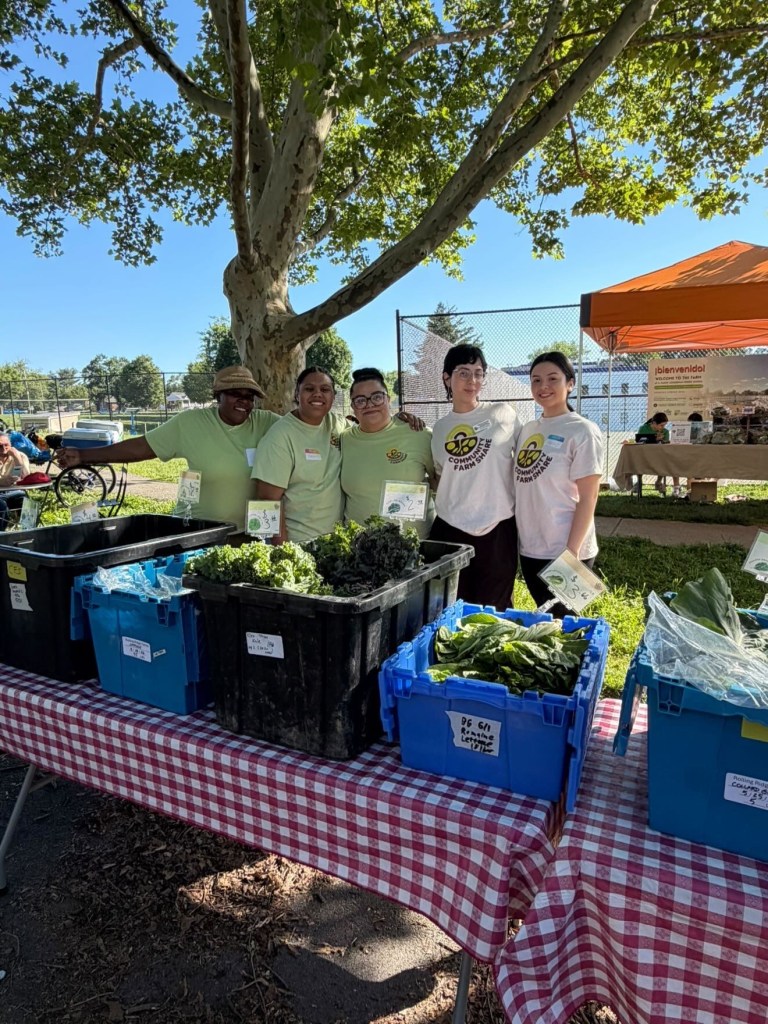
- Our markets are staffed by our Market Managers, CFS volunteers, and Market Operator interns through a partnership with the Universities of Shady Grove and Montgomery College. Our Market team loads up the market produce into our refrigerated truck at our aggregation hub in Gaithersburg and drives the truck to the Mobile Farm Market site, where our Market staff set up, support market shoppers, run registers, restock produce, and break down the market setup at closing.
- We offer nearly 100 types of culturally relevant produce throughout the season, including hot peppers, cilantro, okra, tomatoes, sweet potatoes, and culturally relevant greens. The quantities and varieties offered at each market are tailored to the location based on sales data collected at the registers the previous week. This way, we’re able to stock our markets according to community preference.
- For example: spinach is very popular at Burnt Mills ES, while cilantro is popular at Gaithersburg ES!
- Our Nutrition Education Coordinator also offers onsite nutrition education for market shoppers (read more at Food is Medicine).
- Our Mobile Farm Markets are open to all community members, not just those enrolled in our Food is Medicine or Farm to School programs. While our program participants receive a card with preloaded funds to shop at our markets, we also accept SNAP and SUN Bucks, which are matched by Maryland Market Money up to $20. We also accept cash and credit/debit cards.
“The vegetables are good quality and very fresh. Thank you for these markets. I hope that they will always exist.”
-2025 program participant
Why produce bags?
Even with our robust Mobile Farm Market schedule and variety of locations, some families still face scheduling and transportation challenges, as well as mobility issues, that prevent them from shopping at our markets.
“I hope in the future to keep receiving these produce bags, which help us stay healthy with good food!”
-2023 Food is Medicine program participant
How our produce bags work:
We work closely with our partners to determine who needs produce bag delivery, either to their school or straight to their home.
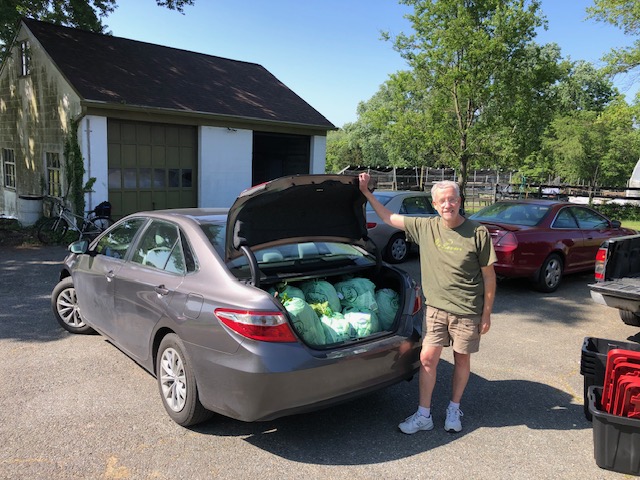
We have a wonderful team of volunteer produce-bag packers who pack the bags each Wednesday. Each bag contains 8-10 culturally relevant produce items and weighs about 10-12 lbs. Once the bags are packed on Wednesdays, our dedicated volunteer drivers deliver the produce bags to our families on Wednesday or Thursday – a super fast turnaround, to ensure the produce is as fresh and nutrient-dense as possible!
IMPACT
We intentionally locate the markets at schools and community locations in High Food Priority Areas (HFPAs) so that the majority of our program participants are within 10 minutes of at least one of our market locations. We see in the data that many of our families shop at various Mobile Farm Markets throughout the month – so as they travel around the county for work, childcare, and errands, they can stop by one of our markets any time that works for their schedule.
We believe that reducing food and nutrition insecurity should be done in a dignified and culturally appropriate manner. Our free-choice Mobile Farm Markets reflect our belief that people should have autonomy over the food they receive, reflecting their preferences, cultural traditions, and medical needs. Our MC Market Cards enable families to shop like any other shopper at our Mobile Farm Markets, whether they are receiving free produce or paying with their own funds. Markets that provide fruits and vegetables that families can turn into meals respects people’s capacity and desire to cook for themselves and their families as an expression of care, culture, and identity.
“We always found products we liked, and the market’s location worked well for us. I like that we can choose what we truly need.”
-2025 program participant
CFS’s Impact:
- In 2025, 750 households received MC Market Cards for weekly market shopping.
- 142,000 lbs of produce, including 78 different types of produce throughout the season, were selected at markets in 2025
- 3,850 produce bags, packed with 44,200 lbs of produce, were delivered in 2025
- Shoppers share with us that our markets provide a sense of community: “You feel more in your element, more trusting [at the market]…. Many moms who go [to the markets] get to know each other, chat, relate to one another, and you coexist more with the community.”