
WHAT IS FOOD IS MEDICINE?
Food is Medicine programs, including Produce Prescriptions (PRx), have become increasingly powerful and cost-effective interventions to address diet-related chronic conditions and health disparities, in addition to improving household nutrition security for positive long-term outcomes. The Food is Medicine approach to healthcare recognizes diet as a crucial determinant of health and accordingly integrates diet-based interventions into clinical patient care to prevent, manage, and treat chronic illnesses.
Why does CFS do this work?

- High rates of diet-related chronic disease (DRCD): Poor diet is the leading cause of U.S. mortality (also reflected in Montgomery County), which is directly related to malnutrition and chronic diseases including type 2 diabetes, cardiovascular disease, obesity, and some cancers. A recent study found that on average, ultra-processed foods supply about 50% of an adult’s daily calories Every additional 10% of calories from ultra-processed foods was associated with higher blood pressure and cholesterol levels, as well as greater prevalence of diabetes and cancer.
- Health inequity: Food insecurity disproportionately affects underserved communities of color, with Black, Hispanic, Pacific Islander, and American Indian households all facing much higher food insecurity rates than White households across the U.S. As a result, communities of color also tend to have higher rates of diet-related chronic disease: obesity and other cardiovascular disease risk factors, including diabetes, are prevalent among Hispanic communities, while Black individuals tend to develop hypertension at an earlier age and are less likely to receive treatment. A CAFB-NORC study found that food-insecure individuals in the greater DC region are more than twice as likely to have a chronic health condition compared to their food-secure counterparts (29% vs. 13%).
- High healthcare costs: Managing chronic conditions is expensive for both individuals and the healthcare system: A 2025 study found that about 84 million adults are treated annually for diet-related conditions, at an average annual cost of $334 billion.
“Thank you for thinking of those most in need. I am deeply grateful for this help that does us so much good. All the vegetables are delicious, fresh, and nutritious!”
-2025 program participant
How CFS does this work:
Our program model is integrated into the classic Food is Medicine (FIM) pyramid through programs that combine patient choice and nutrition education to empower people for long-term health outcomes.

Food Production:
Local food is the best fit for Food is Medicine programs because the nutritional quality of food is directly tied to soil quality and good farming practices. Industrial agriculture has depleted soil quality, while local farmers are more likely to use regenerative soil practices that feed nutrient-dense plants. Local small farms are also more likely to grow varieties chosen for flavor and nutrition rather than shelf life and shipping durability.
Finally, local food has a much quicker turnaround from farm to plate, preserving far more vitamins, minerals, and phytonutrients that degrade rapidly after picking. A tomato eaten days after harvest is much more nutrient-dense than one eaten weeks after harvest.
Healthy Food Access:
Food is Medicine is an impactful clinical approach for healthcare for people who cannot physically or financially access healthy food options. Many people live in areas with limited access to fresh, affordable, healthy food, while fast food and ultra-processed options are cheap and convenient.
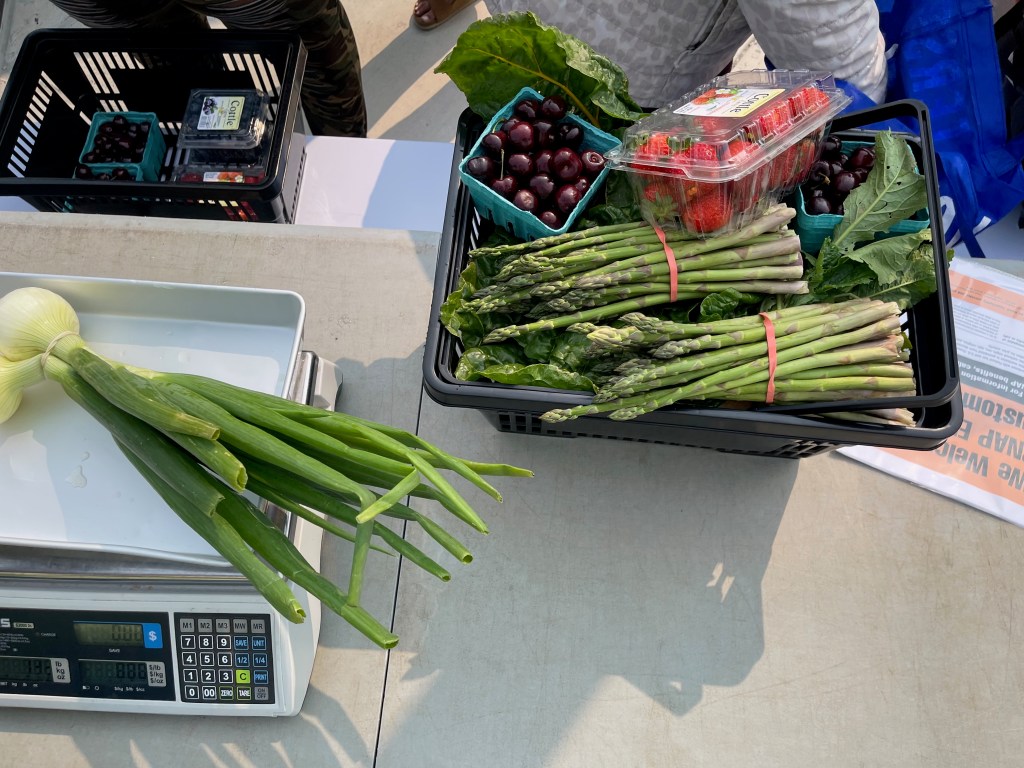
Our free-choice Mobile Farm Markets bring fresh, local produce directly to high-traffic, High Food Priority Area (HFPA) communities across Montgomery County, offering nearly 100 types of culturally relevant produce throughout the whole season.
To further increase access and reduce barriers, we also hand-pack and deliver produce bags to those who can’t make it to our weekly markets for a variety of reasons.
Nutrition Education:
Food is Medicine programs are most successful when healthy food access is paired with effective nutrition education. We provide nutrition education right where people make their food choices: at our Mobile Farm Markets! Our onsite Nutrition Education Coordinator helps shoppers evaluate the nutritional benefits of different produce and provides cooking and recipe ideas, including recipe cards with nutritional information. This point-of-purchase guidance helps shoppers understand which fruits and veggies reduce inflammation, manage blood sugar, or support heart health.
Our health clinic and community-based organization partners also provide nutrition and diet-related chronic disease management classes. Paired with access to fresh produce, these two components of “Food is Medicine” help lead to improved outcomes for our program participants.
Healthcare Partners:
Our healthcare partners build a trusted relationship with their patients in the same communities we serve, referring patients to our programs when it’s the right fit. They also provide baseline and disease management care, follow-up care, and monitor clinical outcomes.
THE FOOD IS MEDICINE PYRAMID
Medically Tailored Meals (MTMs)
Medically tailored meals (MTMs) provide home-delivered, nutritious meals customized for patients with severe chronic conditions and limitations in activities of daily living.
Production Prescriptions (PRx)
Produce prescriptions are a diet-related chronic disease management program for patients to consume clinician-recommended “prescriptions” for fresh fruits and vegetables. Rather than reaching for a pharmaceutical solution first, the prescribing provider is literally writing food as the medicine, empowering patients to address the root causes of disease through diet.
CFS partners with two university research programs on PRx produce prescription programs, where we fulfill specific produce prescription bags for patients for delivery or pick-up at our Mobile Farm Market:
University of Maryland: CFS is a co-principal investigator for a three year Produce Prescription GusNIP grant with the University of Maryland in Montgomery and Prince George’s Counties. This USDA GusNIP-funded study is focused on type 2 diabetes, high blood pressure, and obesity.
Johns Hopkins University: CFS is partnering with Johns Hopkins University on iThrive, a 12-week extension of JHU’s original THRIVE Produce Prescription Program. iThrive focuses on hypertension and runs for 12 weeks in 2026 – learn more here.
Nutritious Food Referrals
Nutritious food referrals (NFR) provide funds for free or discounted nutritious foods. Individuals receive referrals from healthcare providers or plans after being identified as having or being at risk for diet-related diseases (source: Food is Medicine Massachusetts).
CFS partners with multiple community health clinics and community-based organizations (CBOs) who identify patients who have been screened for food insecurity and are either at risk or already managing diet-related chronic disease. Clinic staff help patients understand CFS’s FIM program and determine if it is a good match for their healthcare needs. Clinics then provide referrals to CFS accordingly and our Community Engagement team supports referred patients with enrolling in either Mobile Farm Market shopping or produce bag deliveries.
Nutrition Incentive Programs
Nutrition Incentive Programs aim to improve diet quality and thus reduce the prevalence of chronic disease. Recipients typically are not required to have or be at risk of developing a diet-related condition to participate in these programs.
- SNAP, administered by the USDA, provides food benefits nationwide to low-income families to supplement their grocery budget so they can afford the nutritious food essential to health and well-being.
- In Maryland, the SUN Bucks program helps families with school-aged children who receive free or reduced-price meals to buy groceries during the summer break when school meals are unavailable.
- Maryland Market Money (MMM), a statewide program, provides a dollar-for-dollar match for purchases made using federal nutrition benefits at participating Maryland farmers markets, farm stands, and CSAs.
At CFS, we accept both SNAP/EBT and SUN Bucks at our Mobile Farm Markets. All SNAP & SUN Bucks purchases at our market are matched dollar-for-dollar by Maryland Market Money, up to $20.
Population-Level Food Policies and Programs
Population-level food policies and programs support FIM interventions within community structures, typically addressing nutrition education or food access. Examples include federal nutrition assistance programs, federal nutrition education, nutrition labeling and regulatory actions, food policy councils, and healthy food financing initiatives (source: ODPHP).
CFS regularly engages with local policymaking agencies and working groups both countywide and statewide, including the Montgomery County Office of Food Systems Resilience, the Montgomery County Food Council, Metropolitan Washington Council of Governments, and the Maryland Food System Resiliency Council (within the Maryland Department of Emergency Management).
IMPACT: food is medicine
- In many cases, a healthy diet can prevent, manage, or even reverse chronic disease. Fresh fruits and vegetables work at the cellular level to reduce inflammation, regulate blood sugar, support cardiovascular function, and strengthen immune systems. Conditions that are typically managed with lifelong medication (such as type 2 diabetes and hypertension) have been reversed or significantly improved through dietary intervention alone in well-documented clinical settings. When those conditions are improved, it can meaningfully reduce or eliminate the need for some medications, reducing side effects and out-of-pocket costs.
- Individuals who are healthier and feel better physically and mentally are able to engage more with their communities, including their families, neighbors, and work colleagues.
- Positive impacts of Food is Medicine at the individual level have a cumulative positive impact on the healthcare system as a whole. When physicians are trained to use nutrition as a first-line tool, it shifts medicine toward prevention rather than reaction, reducing the burden on emergency and specialist care systems. The Rockefeller Foundation (2026) estimates that at scale, Food is Medicine interventions can avoid 2.6 million hospitalizations and save $23.7 billion annually in healthcare costs.
CFS’s Impact:
- Since its founding, CFS has enrolled 742 patients in Food is Medicine in partnership with 10 community health clinics.
- A pilot Produce Prescription program we ran with a community health clinic found that after 24 weeks, 72% of participants significantly decreased their A1C numbers, reducing the risk of diabetes-related eye, kidney, heart, and nerve damage.
- In a CFS survey, 97% of Food is Medicine program participants rated their health level as “pretty good” or “excellent” after the program. 90% reported that as a result of participating in this program, they are likely to permanently adjust their eating habits to be healthier.
- CFS partnered with Johns Hopkins University on its THRIVE Produce Prescription Program. Focused on hypertension and funded by the American Heart Association, the study found that participants experienced an average systolic blood pressure reduction of 13 mmHg: a clinically meaningful improvement. The program showed high acceptability and sustainability potential. “iThrive” is an extension of the program, running for 12 weeks in 2026.
“The fresh food helped me a lot with the pre-diabetes and diabetes conditions in my household. I am very thankful for the help that you’ve given us.”
-2023 Food is Medicine program participant
Our Partners: