FARM SUPPORT
“Around the world, small-scale farmers produce an estimated one-third of the world’s food.”
-Tiny Gardens Everywhere by Kate Brown
Small farms are the heart of healthy communities and the core of sustainable food systems, but are often faced with systemic challenges.
What shaped our modern, industrial food system?
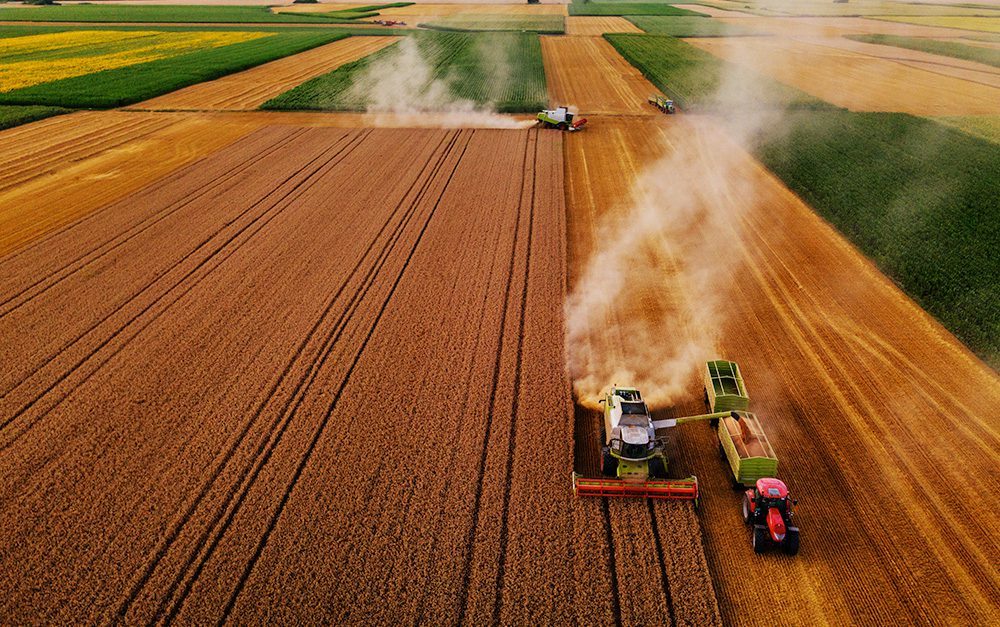

1973 Farm Bill – “Get Big or Get Out”. The 1973 farm bill pivoted American policy around a simple command: “get big or get out.” Price supports for small farmers were replaced with direct payments tied to production volume, resulting in a massive consolidation of farmland and a relentless push toward optimizing for yield and mechanization.
Rise of the Convenience Economy. Running parallel to this was the rise of the convenience economy. As more adults entered the workforce in the 1960s and 70s, time became the scarce resource in American households. The food industry responded by creating and promoting processed and shelf-stable foods; fast and easy became the priorities in eating food.
The Price We Pay for our Industrial Food System: The resulting “industrial” food system is extremely efficient at producing enormous volumes of calories at low sticker prices, and extremely inefficient at accounting for what that production actually costs in terms of ecological sustainability, nutritional quality, farmer livelihoods, and community resilience.
These are real costs, borne by communities, ecosystems, and healthcare systems rather than by the businesses that generate them. Economists call this market failure. In practice it functions as a subsidy: cheap food is cheap partly because the full cost has been offloaded onto everyone else.
Why does CFS support small farms?
Economic Challenges: Small table-crop farms are producing high quality, nutritious food for our food system, but they face an uphill battle when it comes to growing and sustaining their business:
- The bulk of American agricultural subsidies flows disproportionately to the largest producers of a handful of commodity crops (such as corn, soybeans, and wheat). Additionally, the subsidy architecture was built around commodity monocultures, so small vegetable farms almost never qualify.
- The consolidation of farmland has led to increasingly high barriers to equitable access to land, farming resources, and funding, particularly for farmers of color and historically marginalized farmers. Montgomery County’s high cost of living and affordable housing shortage also creates challenges in recruiting and retaining farm workers for labor-intensive fruit and vegetable farms.
- Reliable sales channels are also difficult for small farms to access for a number of reasons, including lower production volume and market awareness/visibility.
The practical consequence is that small farms trying to price their products honestly are competing against products priced artificially low, propped up by federal farm subsidies.
Environmental Challenges:
- Industrial farming is responsible for 26% of global greenhouse emissions. These large-scale operations also consume 70% of global freshwater resources and contribute to soil degradation and erosion. If we do not change the trajectory we are on, 90% of our planet’s soil could be nutrient-depleted by 2050.
- Small-scale producers face severe climate disruption to their operations, exacerbated by climate change. Excessive rain can cause root rot, soil compaction, and nutrient leaching; drought and extreme heat can cause crops to wither in the field; warm winter spells followed by late frosts can wipe out a year’s worth of fruit in a night.
- Small farms lack the financial buffer, weather-combatting infrastructure (such as drip irrigation systems and greenhouses), and crop insurance that larger producers have, to be able to keep their business comfortably viable through crop damage and losses.
Health Challenges:
- A 2025 study from the Netherlands found that since the late 1980s, nutrients like protein, iron, and zinc have fallen by 3.2% across all 43 crops surveyed, which represent the vast majority of plants that humans eat. Another study found that you’d need to eat 8 oranges today to get the same amount of Vitamin A from a single orange 100 years ago.
- Produce varieties grown far away are prioritized for their durability for transport and storage, rather than for flavor and nutrient density.
- To most effectively address diet-related chronic disease, families should be consuming the most nutrient-dense fruits and vegetables possible – which, since most produce loses 30% of its nutrients three days after harvest, are locally grown!
“Programs that intentionally connect healthcare spending with local agriculture, create market opportunities that help farmers stay on their land while strengthening the health, resilience, and prosperity of our communities. By building stronger connections between healthcare and agriculture, we can ensure that farmland stays in production and farmers have viable markets for the healthy foods they grow.”
-Jenny Lester Moffitt, Vice President of Farmland Protection and Strategic Priorities at American Farmland Trust and former Under Secretary for Marketing and Regulatory Programs at USDA
How does CFS support small farms?
Shaped by stakeholder needs, we work with our farm partners on:
Impact:
- Small farms are essential to regional food security. With increasing global uncertainty due to climate change and geopolitical issues, we cannot sustainably rely on food traveling thousands of miles to our plate. Shortening the supply chain from farm to table reduces the number of potential failure points along the path of getting food from farm to table, and increases the volume of high-quality, nutrient-dense food we can consume.
- Supporting local farms also keeps dollars circulating within the community. Studies show that dollars spent at local businesses recirculate locally at roughly 2–3x the rate of dollars spent at large chains or distant suppliers. Our local farms create jobs and support other businesses and organizations!
CFS’s Impact:
- 20+ local farm partners
- 217,200 lbs of local produce bought and distributed in 2025
- $1,214,000 invested into local farms since 2021
“We know that the produce we grow and sell to CFS is directly going towards addressing food insecurity. We hope that CFS continues to grow in their capacity to purchase local food and support communities facing food insecurity – it is vital work!”
-Mike Protas, owner of One Acre Farm (Dickerson, MD)
“In an industry marked by high barriers to entry, Community FarmShare provides the critical pipeline small-scale producers need to thrive…. Community FarmShare is more than a partner; they are the most integral piece of my journey as a Montgomery County producer thus far.”
-Steven Stup, owner of Stelo Acres (Damascus, MD)